
- Photo courtesy of Pixabay
Yesterday I carved out time from my new job to return to my previous workplace and attend graduation for the last group of men to complete a program that has been in place for 21 years. I worked directly with part of the group through most of the time they were there. Just thinking about the experience, before and after, elicits a range of emotions, from sadness to pride, but I welcomed the opportunity to speak at the ceremony. Just days before, I picked up a book I purchased months ago, and what I read prompted my words to them. This is what I had to say:
“This week I started reading a book called Rising Strong, by Brené Brown, PhD. The timing of her words couldn’t have been better, because as I read, I thought of you and what I wanted to say to you as you complete this program and move forward with your lives.
She quoted from a famous speech, “Man in the Arena,” by Theodore Roosevelt in 1910:
“It is not the critic who counts; not the man who points out how the strong man stumbles, or where the doer of deeds could have done better. The credit belongs to the man who is actually in the arena, whose face is marred by dust and sweat and blood; who strives valiantly; . . . who at the best knows in the end the triumph of high achievement, and who at the worst, if he fails, at least fails while daring greatly.”
She continues to focus on the “ugly details” of failing – imagining that we are face down. The crowd may be silent, or booing, or all we can hear is the voice of someone telling us to get up and move on. We tend to think of arenas as some grand event, but these facedown moments can be small ones like our child lying to us about hitting a sibling or a disappointment at work or a “we chose someone else” call after a job interview – basically any moment where we risked showing up and being seen – feeling awkward trying something new, tough parenting moments, being in love, or sharing with your probation officer that you are craving that substance that got you into a world of hurt. She pondered the process of rising strong, of staggering to our feet and finding the courage to try again. What do the people who keep going have in common?
Her research has led her to believe that slowing down the rising and falling process is the key. To cultivate an awareness of the choices that are in front of us in the moments of discomfort and hurt. To take the time to weigh the consequences of those choices, and she has learned that incorporating storytelling into her research has been the most beneficial. And that is part of what you have been doing here for the last few months.
While in this program, you have been asked to share your stories, to become vulnerable. I know that wasn’t easy, because many of you clearly expressed your desire to avoid the pain of being vulnerable, particularly in this setting. I get that. But I watched something happen to you and your peers as you shared. You each grew – some with baby steps, others with giant leaps – in understanding where or why you had moments of failure, thoughts of how you could or would change to avoid that failure in the future, expressions of understanding why a peer is the way he is, and offering acknowledgement for the pain someone else had survived. It was truly amazing to see and I was honored that you trusted me in those moments.
Many of the stories I heard were about huge efforts to avoid feeling pain – whether extreme pain inflicted on you, knowing you hurt others, or the disappointment of neglect – and the failures were acting out the hurt, sometimes on others. Now it’s time to move forward. To be vulnerable with the people who count in your life. Here are the three truths you can take with you from this quote:
Get in the arena. You can choose courage or comfort. One or the other. You can’t have them both at the same time. Your acquaintances who are still using out there? They are choosing the easy way of blocking out pain rather than dealing with it. I’m not saying their lives are easy, but they are choosing what they know, what has become familiar. You know something different now. Take this new experience and build on it.
Vulnerability is not winning or losing; it’s having the courage to show up and be seen when you have no control over the outcome. It really is the greatest expression of courage, not weakness. Being vulnerable with your family, or your probation officer, to ask for help and support. Will you have people say “no?” Sure. But it’s their loss when you go on to experience success without them. That is courage.
A lot of cheap seats in the arena are filled with people who never venture onto the floor. They are always ready to offer put-downs or call you lame for trying to follow probation guidelines or stay sober. If they’re not interested in getting in the game and fighting for their lives, what they have to say about you means nothing. Can you still care and hope they find a way to change? Absolutely, but don’t let their criticisms from the sidelines define you. Will it take time for your family members or sober friends to trust you again? Absolutely. You’ve made promises to them before that have been broken. Prove by your actions that you want to regain their respect. That is courage. And you may be thinking you got the short end of the stick being the last group, with staff leaving and not getting everything previous groups have gotten. But you’re here at the finish line, despite the additional challenges. That is courage.
In light of the upcoming championship games for my favorite sport of basketball: Get out there in the game, and play with all the courage you can muster. When you trip or foul or miss a 3-pointer, take a little timeout, think through your choices, talk with your coach, get back in the game with courage, and crush it.” (CHEERS TO KENTUCKY!)
I must add, that for years I felt like I was sitting on the sidelines, cheering for others, but afraid to play. Waiting for someone to send me in. Afraid of the criticism. Afraid to fall on my face. Afraid the voice in my head that told me I was not good enough was correct. Somehow I mustered up the courage to get back in the game. To return to school and finish a college degree at age 49. I can tell you – it feels infinitely better playing the game and crushing it!
 This week I started a new job after spending the last 4.5 years working as a social worker/ counselor in a county jail-based substance abuse program, run under the direction of the local Sheriff’s office. I am proud of the work I was doing, helping people take a hard look at what got them to this point, see their own potential, and plan the changes that might keep them from returning to alcohol or drugs (and incarceration) as a coping skill. After 21 years of significant success, the powers-that-be decided to hand over substance abuse treatment to the medical and mental health entity, ending the program as it is, and eventually presenting the dreaded pink slips to any personnel who haven’t found other employment. Although I feel sadness and disappointment for the ending of this chapter of my life and career, particularly in this manner, I accept the opportunity to stretch and grow in other areas as I move forward. Saying “so long” is never easy, and it has been an emotional week. This tongue-in-cheek post is meant to lighten up my own mood as much as it is to give a somewhat humorous but real peek into the life of those who work behind the walls and barbed-wire.
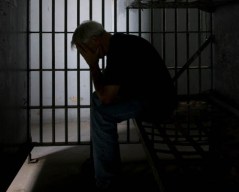 Disrespect of human beings based on their current setting. This does not apply to everyone, but it is reality. I am no bleeding heart and believe most of us have to accept consequences for choices we have made. When employees (not colleagues) ask why you are helping “these people,” it’s disheartening, as “these people” are getting released to my community. The more tools they have to change, the better chance they have to contribute positively. They may not go out and change this time, but some time in their future they may remember something they learned and choose to change. I have to take that chance.
 Actually, waiting is no game. Waiting in line for coffee. Or arms loaded with potential gifts for loved ones while the customer ahead needs a price check. In traffic attempting to get to work on time or race home. Waiting feels like torture. Particularly when pieces of life are in a holding pattern, circling the landing strip that starts the next leg of the journey. Or maybe like vultures waiting for the next potential meal.
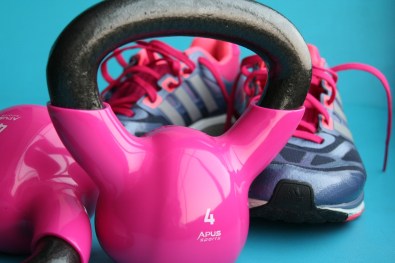 When I signed up for membership at a new gym a year ago (two months before it opened), I wanted, but wasn’t certain I had the motivation, to get in good shape. If you asked me five years ago about regular exercise, I would have scoffed at the idea. When I showed up on the second day after the gym opened, a trainer showed me around, explaining what was offered. And then … he asked me to fill out a form, putting on paper my goals. After I shared what I wanted to accomplish, he worked his magic spell on me and
  Six years ago, I wrote this letter, wiping the tears away after each line. Missing my dad and his goofy jokes, his heart for people, his beautiful tenor voice.

 I don’t really do Halloween. I used to love being someone else for a few hours, and maybe I will again someday. Right now, life and its curveballs are a little too overwhelming to do anything other than smile and acknowledge the cute (or not) costumes and re-imaginations of others and hand over the candy. Without eating ANY of it!
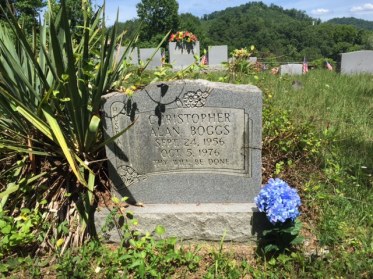 It was the coldest, greyest day I’ve ever experienced. Maybe because my heart felt like a stone. In one of the most beautiful settings in the country, a rustic chapel nestled in the lush mountains, an event so sorrowful occurred. Like an oxymoron. While it might be easier at this point to call it a celebration of life, when the life was taken at such a young age, in the moment, it didn’t feel like celebration. At all.
 I was awakened early when the phone rang at approximately 0500 that morning. It was right outside my bedroom door. My parents had come home from the hospital the previous evening to shower, rest, and do laundry before returning to stay by my brother’s bedside in the ICU 85 miles away. Given the situation, it couldn’t be good news that early. I could hear my dad’s shaking voice as he responded to the call. His weeping indicated the broken heart of a father at the loss of his son. My mom’s tears joined in like an awful, discordant tune. As the tears began to form, she entered my room and sat on the edge of my bed. “You’re an only child now,” she said, but I already knew. For the longest time I wondered why she gave me the news that way. I suppose it’s extremely painful to say the words, “Chris is dead,” when Chris is your son. Is there any good way to say it?
 It was today. October 5th, 1976. Not a year has gone by that the emotions of that day don’t come to mind. There aren’t always tears that accompany, and the wound isn’t raw, but the scar is still there, and sometimes a glance at its ugliness is overwhelming. Why us? Why me? Why did I, with only one sibling, have to be left alone? But if I had to pick one of my friends to experience a similar loss, I couldn’t do it.
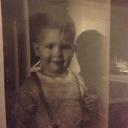 Remembering my brother is not an option for me. Rarely does a day go by that I don’t wonder how he would look, what he would be doing, who he would be impacting, what kind of prank he would be playing on a friend or unsuspecting acquaintance. Celebrating his birthday is one of those days that cannot be overlooked, despite wondering if others think it is weird or creepy to celebrate the birth of someone who has died. At this point, I really don’t care what anyone thinks. In the short fourteen years he served as my brother, his part significantly impacted who I am, and I can’t forget that. Ever.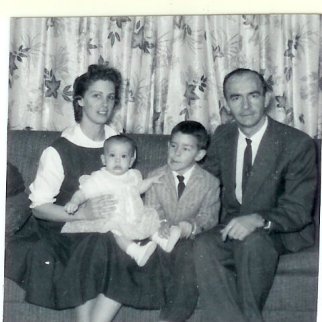
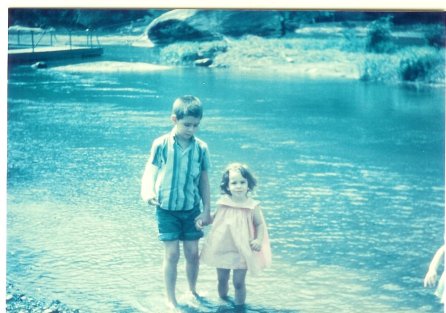
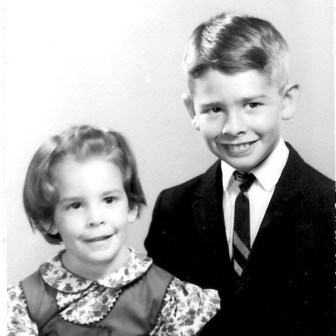 He didn’t want me playing with his toys when he wasn’t around, but that didn’t stop him from inviting me to his room for hours on Sunday afternoons to build Hot Wheels barricades (from C batteries, toy car tires, popsicle sticks, and army men) and watch the cars crash them or laugh as the cats chased them down the track.
 journalmehealthy: is what i see in the mirror real?